
The Art of Living as One with Creation
For Sr. Charlotte Davenport, CSJP, living as one with creation is not simply an environmental commitment. It is the thread that has woven together her life—from childhood, through decades of ministry and leadership, to the way she continues to serve today.
Her understanding of creation has been shaped by science, faith, stewardship, justice, and prayer, each enriching the others and revealing ever more deeply the interconnectedness of all life.
That understanding began long before she entered religious life. Growing up in California, Sr. Charlotte learned to care for ducks, chickens, fruit trees, and gardens. She remembers pruning and watering trees, harvesting fruit, composting, and preserving the harvest each summer with her family. These simple, everyday experiences quietly formed her vision of the world. They taught her that creation is not merely something we enjoy or protect—it is something to which we belong. Those early lessons became the foundation of a lifelong appreciation for the beauty, fragility, and sacredness of the earth.
Her love for creation naturally led her to science. After earning a bachelor's degree in Biology from the University of California, Riverside, she moved to Alaska, where she worked as a research microbiologist for the U.S. Environmental Protection Agency until 1978, when she entered the Sisters of St. Joseph of Peace.
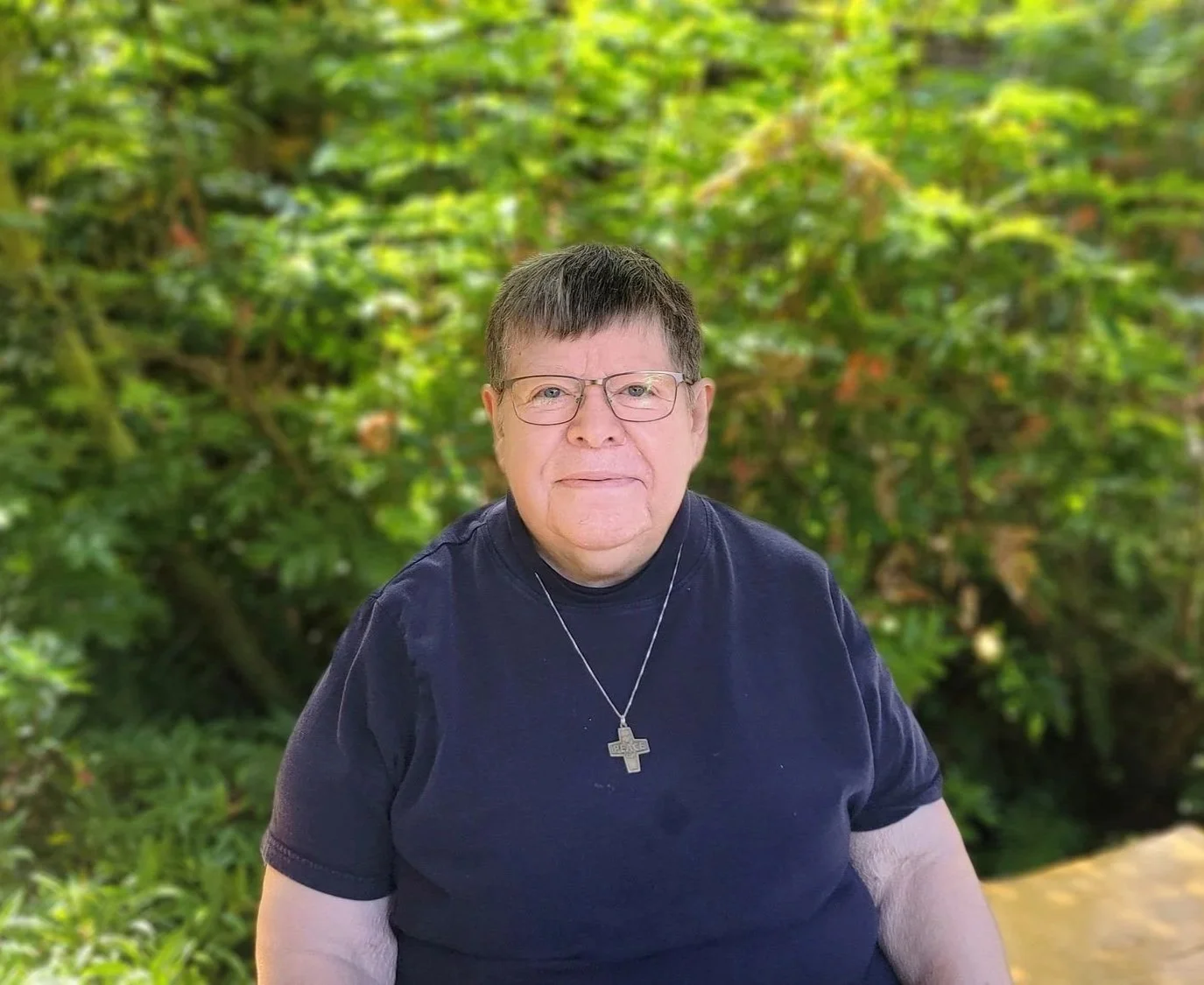
Creation is not merely something we enjoy or protect—it is something to which we belong.
Since then, Sr. Charlotte has served in a wide variety of ministries, bringing more than 28 years of leadership and administration to nonprofit and Church-related organizations. Her work has included Congregation leadership, retirement planning, the development of low-income housing, and service as Chancellor and Chief Financial Officer of the Archdiocese of Anchorage. She has also served on hospital boards within the PeaceHealth system and continues to serve on the Mercy Housing Finance Committee, the Mercy Housing Northwest Real Estate and Finance Committee, the Member Board of the Intercommunity Peace and Justice Center, as well as the Sisters of St. Joseph of Peace Congregation Impact Investment Committee and the regional investment committee.
Her educational background reflects the same integrated vision. In addition to her scientific training, she earned master's degrees in Whole Systems Design and Transformational Leadership—fields that explore how people, organizations, and communities can work together to create lasting, meaningful change. This systems perspective has shaped much of her ministry, leading her to see that environmental concerns, economic justice, housing, healthcare, peacebuilding, and spirituality are not separate issues but deeply interconnected realities.
For Sr. Charlotte, caring for creation has never been limited to environmental action alone. It is about recognizing that every decision—personal, communal, financial, political, or spiritual—has consequences for the wider human family and for the earth itself. She believes we are called to challenge injustice, seek peace through justice, and work collaboratively to build a sustainable future where every person and all creation are treated with dignity and respect. She sees systems and their interactions as important points of entry for identifying change that can transform the world, and she believes that what we can accomplish together is far greater than what any of us can do alone.
Underlying all of this is prayer. For Sr. Charlotte, prayer is not separate from caring for creation; it is what continually grounds and renews that commitment. It nurtures a life of integrity, creativity, discernment, and openness to God's ongoing call. As she herself writes, prayer and spirituality remain essential to living a life that is faithful both to God and to the world God so lovingly created.
Faith, Creation & the Signs of the Times
On the 1st and 15th of each month, Sr. Charlotte, shares timely insights on faith, creation, and our common home. And rather than offering abstract ideas, her writings respond to the signs of the times—the changing seasons, current events, developments in science, the liturgical year, and the challenges and hopes facing our world. Drawing on a lifetime as a scientist, religious Sister, leader, and advocate for justice, she helps us discover the connections between faith, stewardship, community, and creation.
Some pieces may invite quiet reflection or prayer. Others may explore an environmental issue, highlight an inspiring initiative, examine a current event through the lens of Catholic Social Teaching, or suggest practical ways we can care more intentionally for the earth and one another.
Whatever the format, each contribution is an invitation to pause, to notice, and to recognize that caring for creation is not a separate part of our faith—it is one of the ways we live it every day.